
Do Jellyfish Sleep? DNA Repair Study | Jellyfish Museum

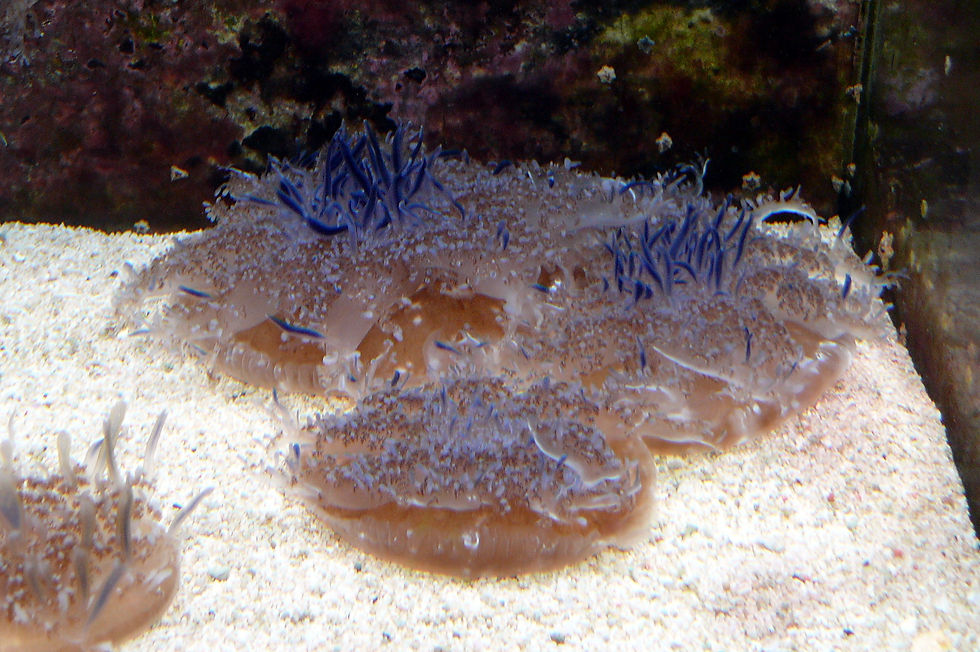
Do jellyfish sleep without a brain? A 2026 study links rest in upside-down jellyfish to DNA repair, with field observations from Key Largo, Florida.
Jellyfish Sleep Study Links Rest to DNA Repair
Do jellyfish sleep? Research on upside-down jellyfish has already shown that these animals can enter a sleep-like state despite having no centralized brain. A study published in Nature Communications on January 6, 2026, takes the question further by examining how sleep relates to damage and recovery in the animals’ DNA.
How scientists study sleep without a brain
The researchers studied the upside-down jellyfish Cassiopea andromeda alongside the sea anemone Nematostella vectensis. Both have nervous systems organized as networks rather than a centralized brain. The team assessed activity, responsiveness and the increased need for rest after sleep deprivation.
Cassiopea generally rested more at night and also showed a midday rest period. Sleep-like behavior in this genus was reported in 2017, so the 2026 work builds on an existing discovery.
What the DNA experiments revealed
Sleep deprivation increased markers of DNA damage in the animals’ nervous systems. Rest was associated with lower damage, while experimental damage also increased the need for sleep. The authors suggest that cellular maintenance may have helped drive the evolution of sleep.
That evolutionary explanation remains an interpretation of the evidence. The experiments do not establish that jellyfish dream or experience the same sleep stages as people. Research source.
A connection to the Florida Keys
The study also monitored wild Cassiopea near Key Largo, Florida, bringing the research into a natural coastal setting. Those observations connected controlled laboratory work with the daily rhythms of animals in the wild.
For anyone watching jellyfish, the study offers a useful question: what can movement tell us about an animal’s internal state? A quiet-looking animal is not automatically asleep. Researchers need repeated observations and behavioral tests to distinguish rest from other changes in activity.
Curious about the lives behind those drifting bells? Explore more jellyfish science with Jellyfish Museum in Pompano Beach and plan your visit.


Comments